Herb cabinet
Juniper
Juniperus communis and other Juniperus species; savin (Juniperus sabina) is not a substitute. A symbolic and practical entry, not a medical monograph.
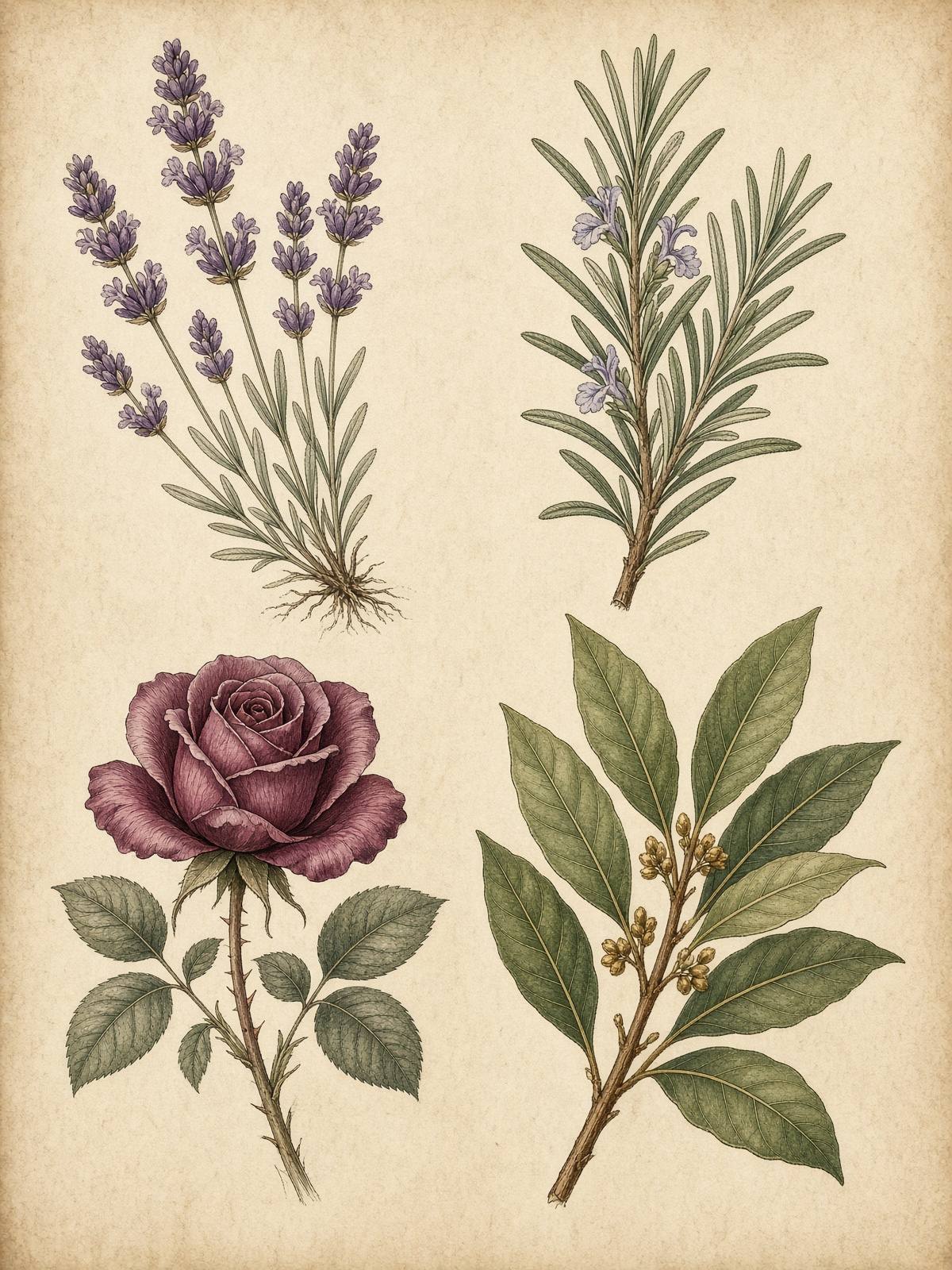
Common juniper is a prickly evergreen shrub or small tree with needles in whorls of three, a pale band on the upper surface, and berry-like cones that take more than a year to ripen from green to blue-black. Savin and many ornamental junipers have scale leaves instead of sharp needles. Crush a needle and the smell is resinous and gin-like only in the right species. This description is not a sufficient identification key.
Names
| Common name | Juniper |
| Botanical name | Juniperus communis and other Juniperus species; savin (Juniperus sabina) is not a substitute |
| Family | Cupressaceae |
| Also called | common juniper, gin berry as a culinary nickname, juniper bush |
| Uncertainty | Junipers differ sharply: common juniper is the gin species, savin is much more toxic, and eastern red cedar is a juniper sold as cedar. |
| Habitat and source | Juniperus communis has a huge northern range, across Europe, Asia, and North America, on heaths, mountains, and poor soils. Ornamental junipers in parking lots are often other species. Buy a culinary berry for the kitchen if you want the gin spice, and do not wild-gather a shrub you cannot name. |
Symbolic correspondences
| Tag | Attribution |
|---|---|
| Element | Fire |
| Planet | Sun |
| Themes | the berry left on the branch · a clean threshold · resin without a potion · protection as attention |
Folklore and history
Juniper has a practical European history: the ripe cones of Juniperus communis flavor gin and game, and several folk traditions, including recorded Scottish and other northern house-fumigations, burned juniper to sweeten a room after illness. That fumigation is historical custom. It is also smoke, which this page will not assign to a pregnant person, a bird, a baby, or an unventilated flat. Culpeper's expanded tables group the juniper tree with other plants under shifting planets; later magical lists often give it to the Sun as a protective evergreen. Grieve discusses the berry, the oil, and the old uses with the confidence of 1931, including uses we now refuse.
Savin, Juniperus sabina, is the grim footnote. It was historically used as an abortifacient and is dangerously toxic. Naming it here is a warning, not a recipe. Kidney irritation from juniper preparations appears in older toxicology and is why we do not recommend the berry as medicine, in pregnancy or out of it. The Wilde Altar does not invent a pagan abortion charm and does not offer juniper as one. A branch at the door is a symbol of keeping watch. The cup stays empty of berries.
Safety
Ritual applications
- A named sprig laid by the outside of a door and taken down the same day
- A culinary gin already in the house, drunk or not as an ordinary adult choice, never as a medicinal dose of berries
- A promise to identify the shrub before any future incense, then choosing not to light it
An original working
The Berry That Stays on the Branch
To set a watchful intention at a doorway without ingesting juniper or burning it.
Timing: Any quiet hour, preferably daylight so you can see what you have picked
- Material: A short sprig of juniper you can identify as not savin, or a drawing if you cannot
- Material: Gloves if the needles are fierce
- Material: A cloth
- Material: A stone or a pin to weight the sprig outside
- Material: A bag for disposal
- 1If you are pregnant, skip the plant and use the drawing. Do not make tea either way.
- 2Identify the sprig as best you can. If it might be savin or an unnamed ornamental, do not use it. Draw a shrub instead.
- 3Do not strip the berries into a cup. Leave them on the sprig or leave them on the tree.
- 4Lay the sprig outside the door, on the step, weighted so it will not blow into a pet's mouth. Say what you are watching for: a lock, a guest, a habit of forgetting the stove.
- 5Bring the sprig back in before night if animals roam, and bag it. If you used a drawing, put it inside the doorframe.
- 6Wash your hands. Check that no berry rolled indoors.
Blue berry, stay on the branch. I keep the cup empty and the watch awake. Protection here is a locked door and a person paying attention.
Close. Bag the sprig for the trash if pets or children might fish it from compost, or compost a berry-free tip of known common juniper only if you are sure. Do not burn it, do not boil it, and do not pour juniper oil outdoors. The working ends when the doorway is clear of fallen berries.
A practical action. Test the lock, replace the battery in a smoke alarm, or text someone the time you will be home.
Substitutions
- A drawing of an evergreen and a checked lock, if identification or pregnancy makes the plant a poor idea
- A culinary rosemary sprig, composted after, as a different doorway aromatic that is not juniper
Growing and sourcing
Common juniper needs sun and poor, well-drained soil and hates wet shade. Do not plant savin in a family garden, and do not start cuttings from unknown parking-lot junipers.
Beginner questions
- Can I drink juniper berry tea for kidneys or cramps? No. This page does not recommend the berry as medicine, and pregnancy and kidney cautions are real.
- Is savin a kind of juniper I can use if I cannot find common juniper? No. Juniperus sabina is severely toxic and is not a substitute.
- Does burning juniper guarantee a clean house? No. Historical fumigation is history, and this working does not burn the plant or promise an outcome.