Herb cabinet
Garden Sage
Salvia officinalis. A symbolic and practical entry, not a medical monograph.
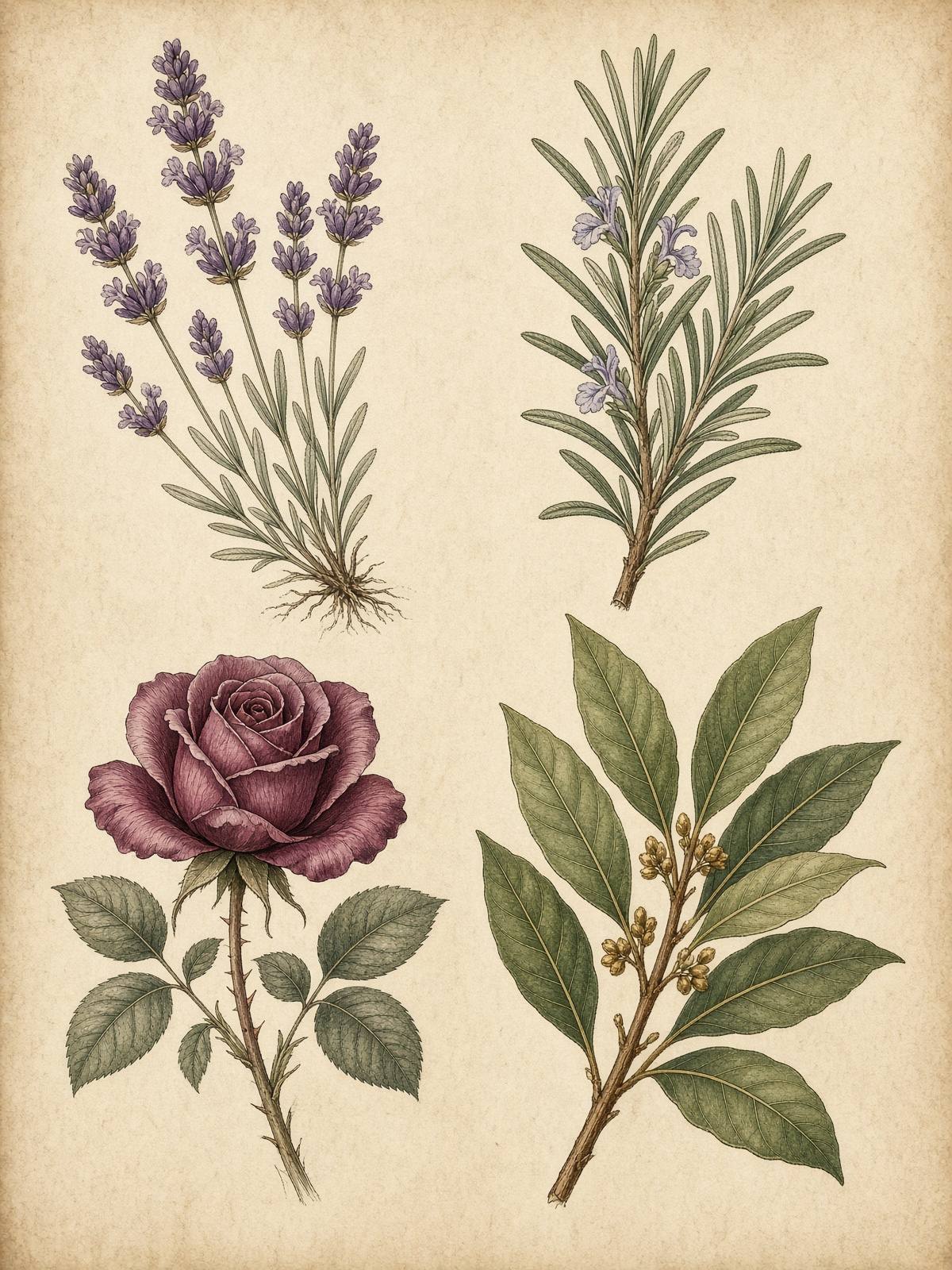
Garden sage is a low woody shrub with oblong, pebbled, gray-green leaves that smell savory and camphorous when rubbed, on square young stems. Purple-blue flowers appear on spikes in early summer. Variegated and purple-leaved cultivars are common and still this species when the label is honest. This description is not a sufficient identification key.
Names
| Common name | Garden Sage |
| Botanical name | Salvia officinalis |
| Family | Lamiaceae |
| Also called | common sage, kitchen sage |
| Uncertainty | High if the word sage is used loosely. This is not white sage, Salvia apiana, not sagebrush, which is an Artemisia, and not Russian sage. Kitchen sage is the gray culinary shrub. |
| Habitat and source | Salvia officinalis is a Mediterranean plant of sun and drainage, grown in kitchen gardens across the temperate world. It dislikes a wet crown in a cold winter and gets woody and sparse after a few years. |
Symbolic correspondences
| Tag | Attribution |
|---|---|
| Element | Earth |
| Planet | Jupiter |
| Themes | kitchen leaf · a name that is yours · ventilated air · not a borrowed rite |
Folklore and history
Culpeper placed ordinary garden sage under Jupiter and repeated the famous old line, already proverbial, that the person who would live long should eat sage in May. Proverbs are not data, and this page will not turn May sage into a longevity diet. Grieve describes the kitchen shrub, the drying of the leaf, and the older pharmacy. That is the European record of Salvia officinalis: stuffing, tea in the casual sense of a bitter cup, and a reputation too large for the evidence.
A different plant, white sage, has ceremonial relationships in specific Indigenous nations of western North America. Those relationships are not ours to copy, rename, or sell back as a lifestyle. Burning garden sage and calling it smudging is a confusion of species and a taking of a rite. If a person from this library's own traditions ever burns a single dried culinary leaf, the honest name is a ventilated kitchen-herb smoke, not smudging, and smoke is harsh on lungs and on pets. The working below does not need fire at all. A leaf in a bowl while you clean is enough Jupiter for one afternoon: enough order, enough savor, no costume.
Safety
Ritual applications
- One culinary leaf in a bowl while the kitchen is cleaned
- A spoken distinction between this plant and white sage
- A savory meal seasoned normally, not as a longevity charm
An original working
The Leaf in the Bowl
To clear one kitchen surface with a garden herb of your own tradition, without smoke and without borrowing anyone else's ceremony.
Timing: When the kitchen is due for a real clean. Daylight and an open window suit it. No charcoal.
- Material: One fresh or dried leaf of Salvia officinalis
- Material: A small dry bowl
- Material: A cloth and ordinary soap
- Material: The surface you will actually clean
- Material: A window that can open
- 1Open the window. If anyone in the house has asthma or if pets must stay in the room, you will not burn anything, which this working already forbids.
- 2Set the single leaf in the dry bowl. Do not light it. Do not call the bowl a smudge shell.
- 3Read the words, including the sentence that names this as kitchen sage and not white sage.
- 4Clean the one surface with soap and water until it is actually clean. The leaf does not scrub.
- 5If you are cooking afterward, you may use a separate culinary pinch in the food. Do not eat the bowl-leaf as a dose, and do not add oil.
- 6Compost the leaf when you are done, wash the bowl, and close the rite by putting away the soap.
This is garden sage, and the work is soap and water. I will not borrow a ceremony that is not mine to burn. Order on one surface is enough for today.
Close. Compost the culinary leaf. Do not burn it as an afterthought, do not drink a medicinal jug of sage, and do not store the essential oil as a tool of the rite.
A practical action. Finish the dishes that belong to that surface, and leave the window open a few minutes so the room smells like air, not like a product.
Substitutions
- Thyme in the bowl, used the same unburned way, if you have no garden sage
- Soap, water, and no herb, if you want the cleaning without any scent
Growing and sourcing
Plant garden sage in sun and sharp drainage, and replace woody old plants when they stop leafing well. Do not confuse the nursery tag with white sage, and do not grow either as a prop for a ceremony you do not hold.
Beginner questions
- Is garden sage the same as white sage? No. White sage is Salvia apiana. This page is culinary Salvia officinalis, and it does not teach smudging.
- Is sage smoke harmless if I open a window? Smoke is still harsh for lungs and pets. This working does not burn the leaf.
- May I eat a lot of sage or drink the oil for a long life? No. A culinary pinch is food. Bunches and the oil are not a longevity plan, and the oil is where thujone is concentrated.