Herb cabinet
Anise
Pimpinella anisum. A symbolic and practical entry, not a medical monograph.
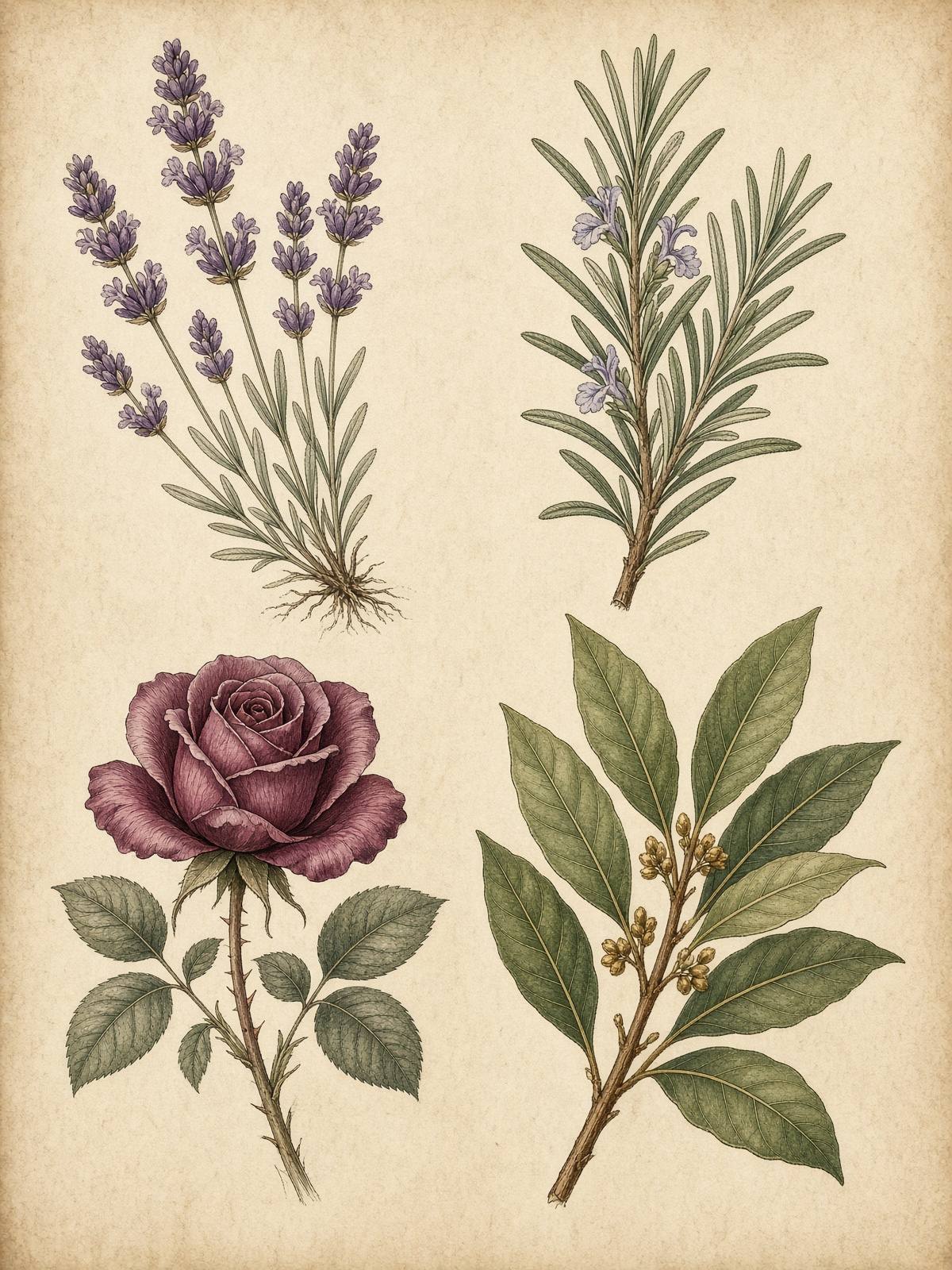
Anise is a delicate annual umbellifer, rarely above knee height, with feathery lower leaves and finer, more divided upper ones. The flowers are tiny and white, in loose umbels, and the seeds that follow are gray-brown, ribbed, and strongly sweet-scented. The whole plant is airy rather than stout. This description is not a sufficient identification key.
Names
| Common name | Anise |
| Botanical name | Pimpinella anisum |
| Family | Apiaceae |
| Also called | aniseed, anise seed, sweet anise |
| Uncertainty | Aniseed is the small seed of Pimpinella anisum, not star anise (Illicium), and Japanese star anise is poisonous. |
| Habitat and source | It is an eastern Mediterranean crop, long grown in warm gardens and fields for the dried seed. Kitchen anise comes from spice sellers; it is not a plant to wild-gather among hemlocks. |
Symbolic correspondences
| Tag | Attribution |
|---|---|
| Element | Air |
| Planet | Mercury |
| Themes | clear speech · the opened door · sweet breath of welcome · a seed, not a star |
Folklore and history
Aniseed has a long, ordinary place in breads, cordials, and lozenge flavors from the Mediterranean into early modern Europe. Dioscorides and later the Latin herbal tradition discuss Pimpinella anisum as a kitchen and physic seed. Culpeper's planetary tables, in the expanded English Physician printings, group aniseed with Mercury's plants, beside dill and fennel, which suits a herb of speech, trade, and the small distinguishing detail. Grieve treats anise as a flavoring and as an old domestic aromatic. None of that history is a blank check for essential oil.
Star anise is a different plant, Illicium verum, a Chinese tree fruit that only smells cousin to anise; Illicium anisatum is toxic. Confusing them is a modern shopping error with old consequences. Contemporary magic that uses anise for psychic sight or to force someone to tell the truth is a modern attribution, and it does not work as coercion. The Wilde Altar uses the seed, when we use it, as a token of hospitable speech: you may offer clarity, and you may not pry someone's mouth open with a spice.
Safety
Ritual applications
- A pinch of aniseed folded into a hospitality biscuit that is eaten as food
- Three seeds on a saucer during a conversation you want to keep honest and kind
- The jar smelled, then closed, before you write a difficult truthful letter
An original working
The Honest Biscuit at the Door
To season a welcome and practice saying one true thing without trying to control a guest.
Timing: Any quiet hour before guests, or before you sit down to write
- Material: A half-teaspoon of culinary aniseed, or less
- Material: Biscuit or bread dough you were already willing to bake, or a plain cracker if you will not bake
- Material: A small saucer
- Material: A pen and paper
- Material: A plate for serving
- 1Measure a culinary amount of aniseed. Do not open an essential oil bottle.
- 2If baking, fold the seed into the dough and bake as the recipe says. If not, set three seeds on the saucer and leave them whole.
- 3Write one sentence you can truthfully say to the person you are thinking of. It must not be a command about their body, love, or money.
- 4Read it aloud to the empty room.
- 5Serve the baked good as food, or compost the three whole seeds if you did not bake.
- 6Wash the saucer. Put the sentence in your pocket only if you still mean it when the oven is cold.
Seed of clear air, sweeten the threshold, not the truth. I will say what I mean and leave them room to answer. Welcome is a door, not a trap.
Close. Eat only what was baked as food. Compost unused seeds. Do not pour anise oil outdoors or into a drink. The working ends when the sentence is either spoken or deliberately unsent.
A practical action. Say the sentence, or send the letter, and accept the answer you actually receive.
Substitutions
- Culinary fennel seed, in a food pinch, if anise is unavailable
- A scrap of lemon zest in the dough, as a bright kitchen stand-in with no herbal dose
Growing and sourcing
Anise wants a long warm season and does not transplant well; sow it where you can leave it, or simply buy the seed. It is a garden annual, not a plant to scatter in wild meadows.
Beginner questions
- Is anise the same as star anise? No. Anise is Pimpinella anisum seed; star anise is a different fruit, and some Illicium species are poisonous.
- Can I drink anise oil for courage? No. The oil is not a culinary pinch and is not a potion.
- Will anise make someone tell me the truth? No. It marks a hope for clear speech; it does not compel another person.